
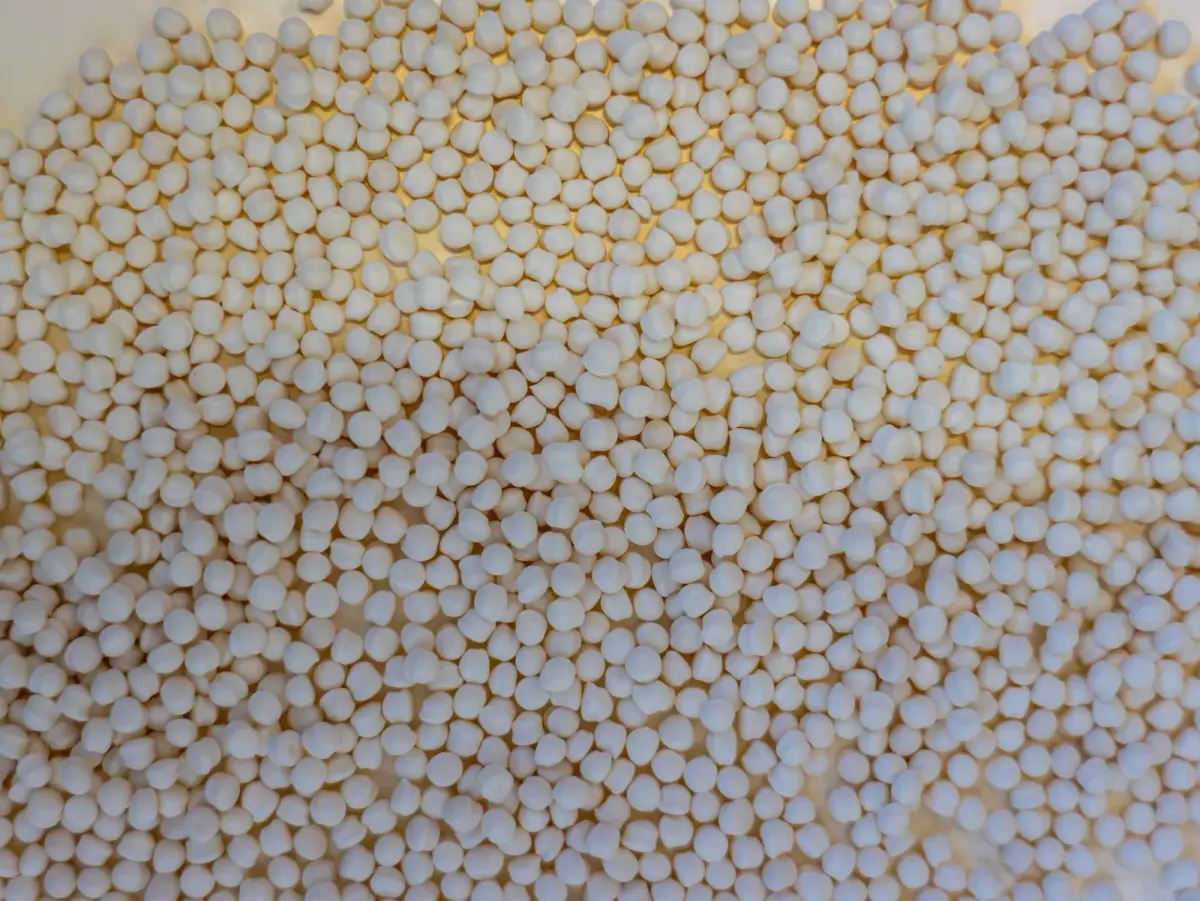
EP(D)M pelletisation.
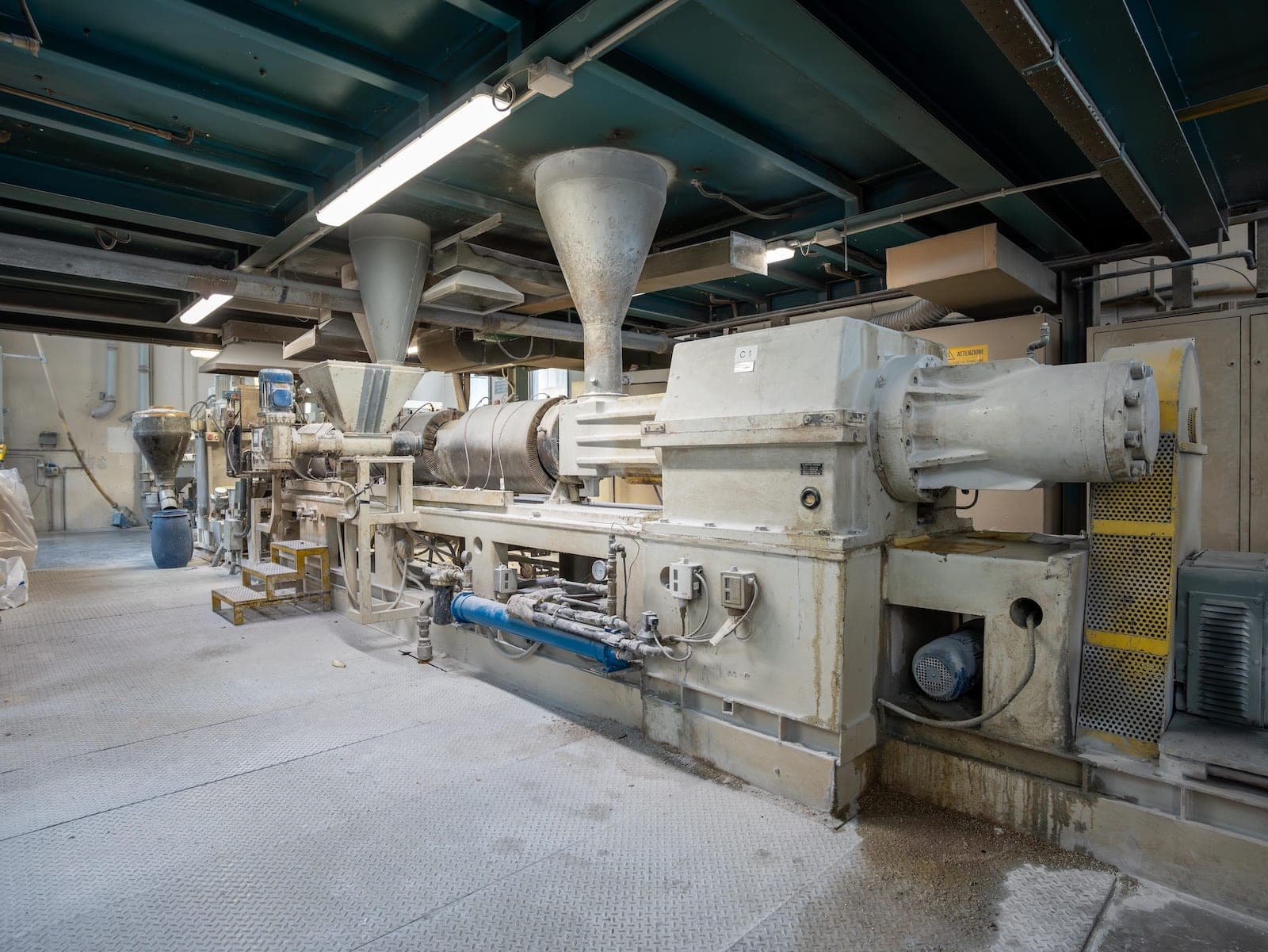
- Raw / baled EP(D)M
- Automated dosing
- Storable pellets
Process overview
From raw EP(D)M to dosable pellets.
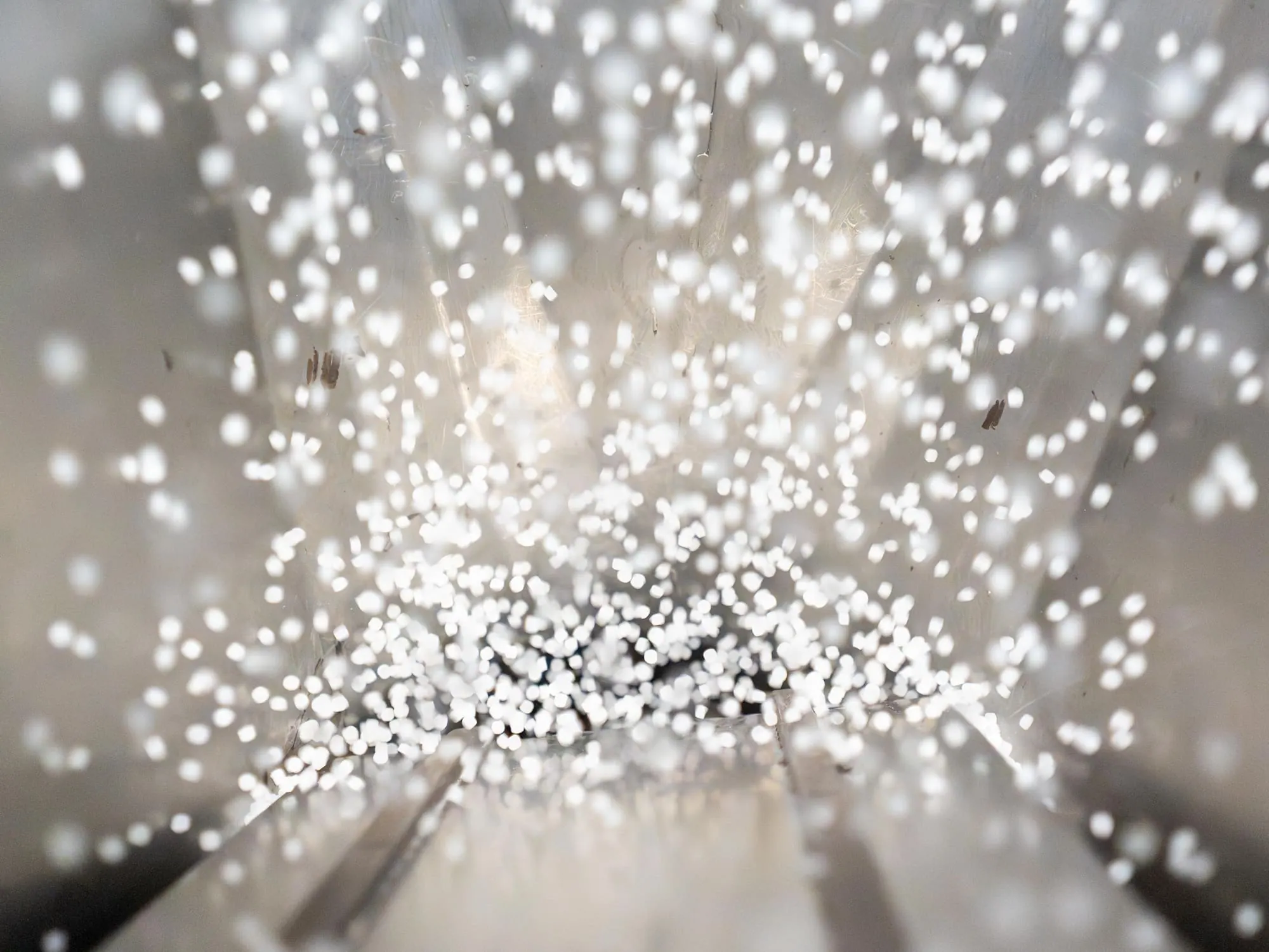
We transform raw or baled EP(D)M into dimensionally consistent pellets, ready to be dosed in extrusion, moulding or blends with polyolefins. Pelletisation enables automated, repeatable feeding of customer lines, eliminating the instability typical of manual cutting.
The process is optimised not to degrade the elastomeric matrix: controlled thermal profile, dedicated screw, targeted cooling to obtain non-tacky pellets that can be stored in big bags without blocking.
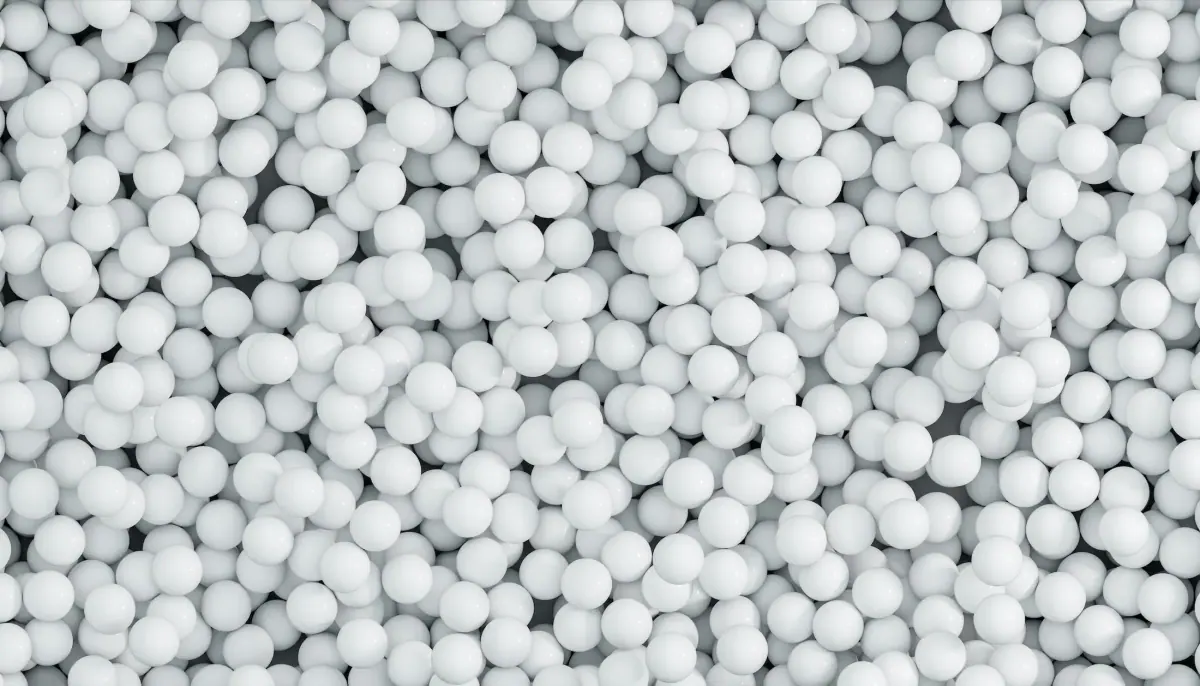
Technical specs
Key parameters at a glance.
Raw material
Raw / baled EP(D)M
Output form
Pellets
Dosing
Automated & uniform
Pilot MOQ
1,000kg
Packaging
Big bag · 25 kg sacks
End use
Extrusion · moulding
How we do it
Four phases for dosable EP(D)M.
Turning the elastomer into pellets without degrading the rubber matrix.
EP(D)M intake and qualification
Inspection of baled or raw material: type, hardness, any fillers or recipes added by the customer.
Output: EP(D)M data sheetPre-conditioning
Cutting and dimensional adaptation of inbound EP(D)M to ensure uniform feeding to the pelletising line.
Thermo-controlled extrusion
Calibrated thermal profile to shape the EP(D)M without degradation, with anti-stick additivation for storable pellets.
Pelletisation and cooling
Hot-cut with targeted cooling: dimensionally consistent, non-tacky pellets ready for storage in big bags.
Output: EP(D)M pelletsQuality control
Particle-size, bulk density and flow checks. Batch release with CoA and traceability.
Output: Batch CoA
Use cases
What pelletised EP(D)M is for.
All contexts where the elastomer must automatically feed an industrial line.
6 sectors served
Profile extrusion
Automotive seals, building profiles, industrial profiles: pellets enable gravimetric dosing and continuous production.
Compression moulding
Compression-moulded technical parts with dosable, repeatable feedstock and no cutting waste.
Polyolefin blends
TPV / TPE compounds in which pelletised EP(D)M is dosed to the hundredth of a percent together with PP or PE.
Construction
Sealants, gaskets and technical profiles where pellet uniformity improves the quality of the finished product.
Automotive
Rubber parts for body, engine and cabin where feed repeatability is an OEM-quality prerequisite.
Sports goods & surfaces
Sports flooring, surface granulate and applications where EP(D)M requires controlled particle size.
Compatible materials
EP(D)M types we process
- Raw EP(D)M
- Baled EP(D)M
- Filled EP(D)M
- Additivated EP(D)M
- EP(D)M/PP compound
- EP(D)M/PE compound
- On-spec compounds
ISO 9001 — Quality Management System
ISO 9001 certification is the operational foundation of every production: from raw-material intake to batch release, every step is tracked and documented. It is the minimum standard that the major chemical and petrochemical groups demand of their industrial partners — and the standard Green Plast guarantees, batch after batch.
- Annual surveillance audit
- Lot-by-lot traceability
- CoA with every shipment
Scope of certification
- Compounding
- Formulation
- Quality control
- Logistics
- 35+
Years of certified operation
- 100%
Batches with CoA
- 4
Stages controlled end-to-end
- EU
Tracked shipments
Technical questions
Quick answers on EP(D)M pelletisation.
The most frequent questions from extrusion and moulding technical departments.
Can’t find your answer?
Speak directly with a Green Plast technician.
Choose top-quality plastics processing.
Producing high-performance plastic compounds is our specialty. We analyze requirements and formulations, work in partnership with our customers and — thanks to decades of experience — deliver tailored, optimized and reliable processing for highly specific, qualified products.