

Polystyrene compounding — first and second life.
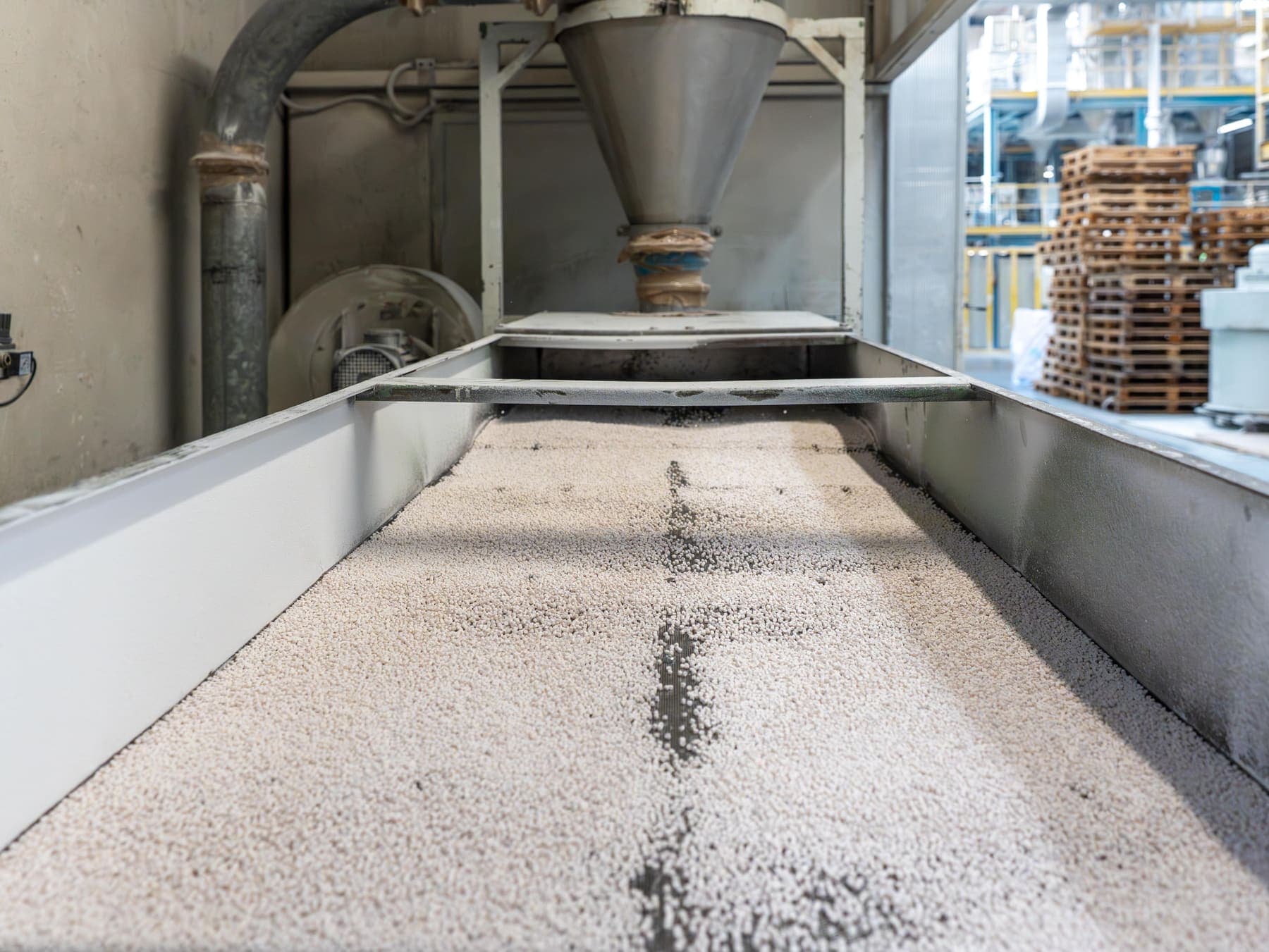
- Up to 60% recyclate
- Lab validation
- Recyclate % on CoA
Process overview
Circular economy in polystyrene compounding.
We compound first-life polystyrene and post-industrial second-life regrind in calibrated blends: the output is a compound with consistent mechanical performance, lowering carbon footprint and virgin-resin cost.
Integrating recyclate requires tight control over second-life cleanliness, particle size distribution and colour. Our in-house laboratory validates every new regrind stream and defines the optimal blend ratio case by case.
Technical specs
Key parameters at a glance.
Raw material
Virgin PS + recyclate
Recyclate %
up to 60%
Output form
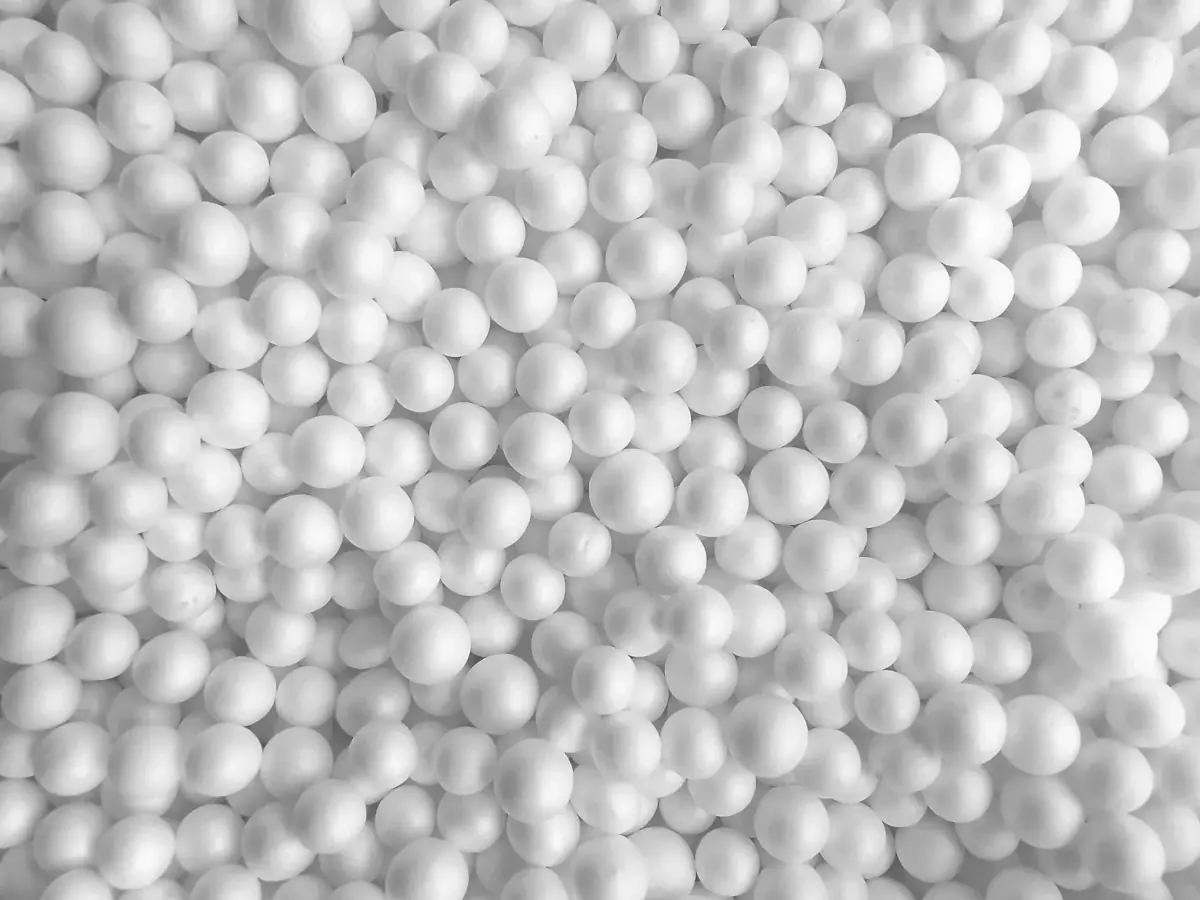
Pellets
Traceability
Lot-by-lot
Validation
In-house lab
Pilot MOQ
500kg
How we do it
Six phases for the circular economy.
Recyclate validation, calibrated blend and performance equivalent to virgin.
Second-life material audit
Inbound regrind analysis: particle size, MFI, moisture, contaminants, colour.
Output: Second-life data sheetOptimal blend definition
The lab defines the recyclate percentage compatible with the mechanical and aesthetic spec of the finished product.
Calibrated gravimetric dosing
Accurate weighing of virgin, regrind, masterbatch and corrective additives to homogenise the blend.
Extrusion and homogenisation
Optimised screw profile to ensure uniform dispersion of second-life material in the base polymer.
Pelletisation
Dimensionally consistent pellets, ready for downstream moulding or extrusion.
QC and release with CoA
MFI, density, ΔE and mechanical property checks. Batch release with CoA + recyclate-percentage traceability.
Output: CoA + recyclate-% statement
Use cases
When recyclate makes the difference.
Sectors where sustainability has to coexist with performance and quality consistency.
6 sectors served
Sustainable packaging
Rigid and flexible packaging with declared recyclate quotas, compliant with the sustainability requirements of global brands.
Construction & insulation
Technical profiles and on-site components where appearance is secondary and sustainability is a buying driver.
Industrial articles
Technical components for which the mechanical spec can be reached even with significant recyclate quotas.
Durable goods
Houseware and furnishings on greener product lines: compounds that preserve mechanical properties and accept aesthetic finishes.
Automotive components
Internal and hidden parts with growing second-life quotas, in line with OEM sustainability targets.
Logistics & crates
Pallets, reusable crates and industrial containers with high-recyclate-content compounds.
Compatible materials
Compatible feedstocks and streams
- Virgin PS
- Recycled PS-GP
- Recycled HIPS
- Post-industrial regrind
- Corrective masterbatches
- Compatibilising additives
- Thermal stabilisers
- Antioxidants
ISO 9001 — Quality Management System
ISO 9001 certification is the operational foundation of every production: from raw-material intake to batch release, every step is tracked and documented. It is the minimum standard that the major chemical and petrochemical groups demand of their industrial partners — and the standard Green Plast guarantees, batch after batch.
- Annual surveillance audit
- Lot-by-lot traceability
- CoA with every shipment
Scope of certification
- Compounding
- Formulation
- Quality control
- Logistics
- 35+
Years of certified operation
- 100%
Batches with CoA
- 4
Stages controlled end-to-end
- EU
Tracked shipments
Technical questions
Quick answers on circular polystyrene.
The most frequent questions from sustainability and R&D departments.
Can’t find your answer?
Speak directly with a Green Plast technician.

Choose top-quality plastics processing.
Producing high-performance plastic compounds is our specialty. We analyze requirements and formulations, work in partnership with our customers and — thanks to decades of experience — deliver tailored, optimized and reliable processing for highly specific, qualified products.